Introduction
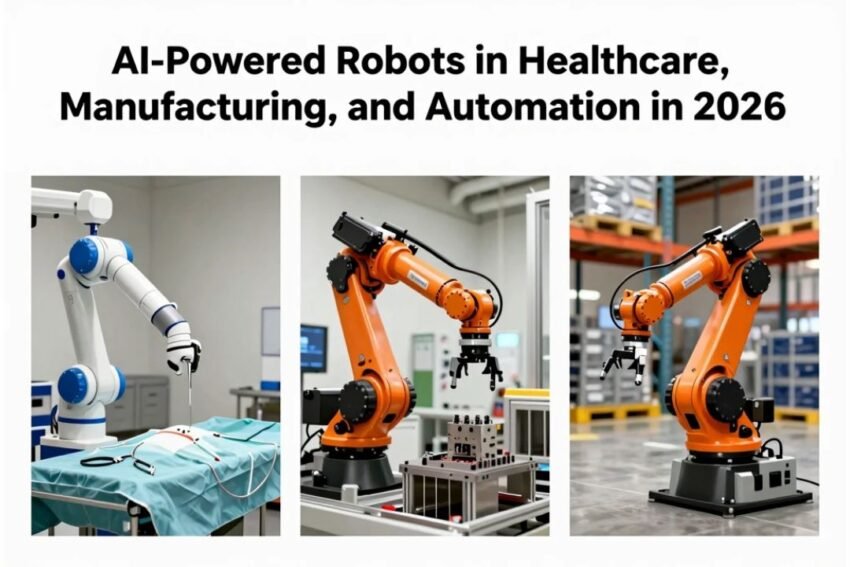
In 2026, AI-powered robots are revolutionizing industries by combining artificial intelligence with advanced robotics. From hospitals to factories, these intelligent machines enhance efficiency, precision, and safety. They are not just tools—they are strategic partners helping organizations optimize operations, reduce errors, and improve outcomes.
This human-written, SEO-optimized guide explores the real-world applications of AI robots in healthcare, manufacturing, and automation, highlighting benefits, challenges, and future trends.
What Are AI-Powered Robots?
AI-powered robots are machines equipped with artificial intelligence algorithms that allow them to:
- Make autonomous decisions
- Learn from data and experience
- Adapt to changing environments
- Perform tasks with precision and efficiency
Unlike traditional robots that follow pre-programmed instructions, AI robots perceive, analyze, and respond intelligently in real-time.
Applications in Healthcare
1. Surgical Assistance
- Robotic surgical systems assist in minimally invasive procedures.
- AI analyzes patient data and guides precision movements.
Impact:
- Reduced surgical errors
- Faster recovery times
- Enhanced patient outcomes
Example: Hospitals use robotic arms guided by AI to perform delicate operations such as cardiac or neurological surgery.
2. Patient Care and Monitoring
- AI robots assist in elderly care and rehabilitation.
- Monitor vital signs and remind patients to take medication.
Impact:
- Reduces workload on healthcare staff
- Provides personalized care
- Enhances patient safety
Example: Robotic caregivers in nursing homes provide mobility assistance and health monitoring for seniors.
3. Diagnostics and Imaging
- AI algorithms analyze medical images for faster diagnosis.
- Robotic systems assist with lab testing and drug discovery.
Impact:
- Early detection of diseases
- More accurate diagnostic results
- Improved efficiency in laboratory operations
Example: AI-powered robots in radiology detect tumors and anomalies in scans more accurately than traditional methods.
Applications in Manufacturing
1. Smart Assembly Lines
- AI robots perform welding, painting, and assembly.
- Use computer vision to detect defects in real-time.
Impact:
- Increased production speed and precision
- Reduced operational errors
- Lower labor costs
Example: Automotive factories deploy AI robots for precise assembly and quality checks.
2. Predictive Maintenance
- AI monitors machinery performance and predicts failures.
- Robots handle maintenance tasks autonomously.
Impact:
- Reduced downtime and repair costs
- Improved equipment longevity
- Enhanced safety for workers
Example: Factories use predictive AI algorithms to schedule maintenance before equipment malfunctions.
3. Supply Chain Automation
- AI robots manage inventory, packaging, and shipping.
- Optimize warehouse operations with autonomous navigation.
Impact:
- Faster fulfillment of orders
- Lower operational costs
- More efficient logistics
Example: E-commerce warehouses deploy AI-driven robots to pick, pack, and sort products automatically.
Applications in Automation Across Industries
1. Retail and Customer Service
- AI robots provide customer assistance and recommendations.
- Automate stock management and restocking tasks.
Impact:
- Enhanced shopping experience
- Reduced workload on staff
- Improved operational efficiency
Example: Retail stores use robots for inventory checks while AI chatbots handle customer queries.
2. Logistics and Delivery
- AI-powered drones and robots handle deliveries and route optimization.
- Autonomous vehicles streamline transportation of goods.
Impact:
- Faster deliveries
- Reduced transportation costs
- Greater reliability in supply chains
Example: Food delivery robots navigate urban streets autonomously while AI predicts the fastest routes.
3. Agriculture and Precision Farming
- AI robots plant, monitor, and harvest crops.
- Analyze soil, climate, and crop health for optimized yields.
Impact:
- Increased productivity
- Reduced manual labor
- Sustainable farming practices
Example: Farms use autonomous harvesters guided by AI to perform precise planting and harvesting.
Benefits of AI-Powered Robots
- Efficiency: Complete tasks faster than humans
- Accuracy: Reduce human error in critical tasks
- Cost Reduction: Lower labor and operational costs
- Safety: Perform hazardous or repetitive tasks
- Scalability: Easily expand operations without proportional labor increase
- Data-Driven Insights: AI analytics optimize performance and decision-making
Challenges and Considerations
- High Initial Investment: Advanced AI robotics require significant upfront costs
- Workforce Adaptation: Employees need training to work alongside AI robots
- Data Quality: AI depends on accurate, real-time data
- Cybersecurity Risks: Connected systems are vulnerable to attacks
- Ethical Concerns: AI decision-making requires oversight, especially in healthcare
Future Trends (2026+)
- Collaborative Robots (Cobots): Safe human-robot teamwork in workplaces
- Hyper-Automation: AI manages entire processes across multiple industries
- AI-Driven Predictive Analytics: Robots anticipate operational needs and optimize workflows
- Smart Factories and Hospitals: Fully automated and AI-integrated facilities
- Autonomous Mobility: Delivery and transport robots become more widespread
Conclusion
AI-powered robots are transforming healthcare, manufacturing, and automation by combining intelligence, precision, and efficiency. They improve patient outcomes, streamline industrial operations, and enable businesses to scale more effectively.
In 2026, adopting AI robotics is no longer optional—it’s a strategic necessity for organizations seeking innovation, efficiency, and competitive advantage.
FAQs
1. Can AI-powered robots replace humans?
No, they complement human work by handling repetitive, hazardous, or high-precision tasks.
2. Are AI robots safe for healthcare use?
Yes, modern AI robots are equipped with sensors and protocols to ensure patient safety.
3. How expensive are AI-powered robots?
Costs vary, but ROI comes from improved efficiency, safety, and reduced operational costs.
4. Which industries benefit most from AI robots?
Healthcare, manufacturing, logistics, and agriculture are leading adopters.
5. Do AI robots require human supervision?
Yes, while AI automates many tasks, humans provide oversight, strategy, and critical decision-making.
Final Thoughts:
AI-powered robots are shaping the future of industry and daily life. By integrating intelligent robotics in healthcare, manufacturing, and automation, organizations in 2026 can achieve higher productivity, better precision, and safer operations, positioning themselves for long-term success.