Introduction
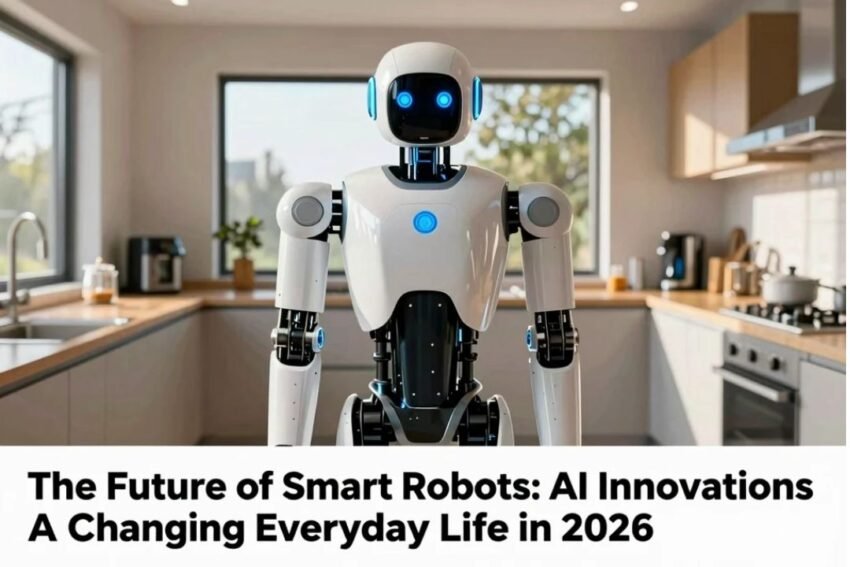
In 2026, smart robots powered by artificial intelligence (AI) are no longer science fiction—they are increasingly integrated into our everyday lives. From homes and workplaces to healthcare and entertainment, AI innovations are making robots smarter, more autonomous, and more helpful than ever before. These advancements are reshaping daily routines, business operations, and societal norms.
This human-written, SEO-optimized guide explores how smart robots and AI innovations are transforming everyday life, highlighting real-world applications, benefits, and future trends.
What Are Smart Robots?
Smart robots combine robotic hardware with artificial intelligence, enabling them to:
- Learn from data and experience
- Make decisions autonomously
- Interact safely with humans
- Adapt to changing environments
Unlike traditional robots that follow pre-programmed instructions, smart robots perceive, analyze, and act dynamically.
Everyday Life Applications of Smart Robots
1. Smart Homes
Applications:
- AI-powered cleaning robots (vacuuming, mopping)
- Home assistant robots for tasks like scheduling, reminders, and entertainment
- Smart kitchen robots that assist with cooking and meal prep
Impact:
- Saves time on household chores
- Enhances convenience and comfort
- Provides personalized home automation
Example: Robotic vacuum cleaners with AI mapping learn home layouts for efficient cleaning.
2. Healthcare and Personal Assistance
Applications:
- Robotic caregivers for elderly or disabled individuals
- AI-assisted surgery and rehabilitation robots
- Remote monitoring and medicine delivery
Impact:
- Improves patient care and safety
- Reduces strain on healthcare professionals
- Provides personalized assistance
Example: Robotic companions help seniors with daily activities while AI monitors their health metrics.
3. Education and Learning
Applications:
- AI robots as teaching assistants in classrooms
- Personalized tutoring and learning support
- Interactive learning robots for STEM education
Impact:
- Improves engagement and learning outcomes
- Provides individualized instruction
- Makes learning interactive and fun
Example: Smart robots guide students through math and science experiments in real-time.
4. Retail and Customer Interaction
Applications:
- Store assistant robots guiding customers and answering queries
- AI robots managing inventory and restocking shelves
- Personalized shopping recommendations using AI
Impact:
- Enhances shopping experiences
- Reduces employee workload
- Streamlines store operations
Example: Retail robots greet customers, suggest products, and check inventory availability automatically.
5. Transportation and Delivery
Applications:
- Autonomous delivery robots and drones
- Self-driving taxis and personal transport robots
- AI logistics robots optimizing supply chain routes
Impact:
- Faster and safer deliveries
- Reduced transportation costs
- Increased efficiency in logistics
Example: Food delivery robots navigate city streets to deliver orders autonomously.
6. Entertainment and Leisure
Applications:
- Social and companion robots for games and storytelling
- AI robots assisting in movie production and music creation
- Interactive robotic toys for children
Impact:
- Adds engagement and personalization to entertainment
- Enhances creativity in media production
- Provides companionship and social interaction
Example: Robotic pets that learn user preferences and respond to emotions.
7. Workplace Assistance
Applications:
- Robotic assistants for administrative and operational tasks
- AI robots performing repetitive tasks in offices and factories
- Collaborative robots (cobots) working alongside humans safely
Impact:
- Increases workplace efficiency
- Reduces human error
- Frees employees for strategic and creative work
Example: Cobots in offices organize files, automate scheduling, and assist in data entry.
Benefits of Smart Robots in Daily Life
- Time Savings: Automates repetitive or mundane tasks
- Safety: Handles hazardous tasks and monitors health
- Personalization: Adapts to user preferences and habits
- Efficiency: Completes tasks faster and more accurately
- Accessibility: Assists elderly, disabled, and busy individuals
- Entertainment and Engagement: Provides interactive experiences
Challenges of Smart Robots
- High Costs: Advanced AI robots can be expensive
- Privacy Concerns: Collecting and processing personal data
- Technical Reliability: Dependence on software and sensors
- Workforce Adaptation: Humans need training to work with smart robots
- Ethical Considerations: Decisions made by AI robots require oversight
Future Trends in Smart Robotics (2026+)
- Hyper-Personalization: Robots learning individual habits for tailored assistance
- Social Robotics: Companion robots with emotional intelligence
- AI-Enhanced Mobility: Advanced autonomous navigation for urban and home environments
- Integration with IoT: Smart homes and cities connected to AI robots
- Collaborative Robots (Cobots): Working safely alongside humans in homes and workplaces
- AI Creativity: Robots contributing to music, art, and content creation
Conclusion
Smart robots powered by AI are changing how we live, work, and interact in 2026. From home assistance and healthcare to education, retail, and entertainment, AI innovations are making everyday life more efficient, personalized, and engaging.
Embracing smart robots responsibly allows individuals and businesses to save time, enhance safety, and unlock new possibilities, marking a future where humans and robots coexist seamlessly.
FAQs
1. Are smart robots safe for home use?
Yes, modern AI robots are designed with safety sensors and protocols for human environments.
2. Can smart robots replace humans entirely?
No, they assist humans by handling repetitive or hazardous tasks while humans focus on decision-making and creativity.
3. How expensive are smart robots?
Prices vary from affordable home assistants to high-end industrial or medical robots.
4. Do smart robots collect personal data?
Yes, many rely on data to personalize experiences; privacy-compliant tools and settings are recommended.
5. Which areas of life will benefit most from smart robots?
Healthcare, home automation, education, retail, transportation, and workplace efficiency are seeing the biggest impact.
Final Thoughts:
AI-powered smart robots are shaping a future where daily life is more convenient, personalized, and intelligent. As these innovations continue to evolve in 2026 and beyond, they will become indispensable tools in homes, workplaces, and public spaces.